
For commercial electrical subcontractors
Working capital for electrical contractors
The gear shows up in week 3. The first check shows up in week 11. Crossbrace Capital helps established electrical contractors carry switchgear, wire and payroll through that stretch, with a plain-dollar cost disclosure in states that require one.
5 taps. No contact details to see your number.
Check your cash gap
Up to 5 taps to an estimate. No contact details needed to see it.
Let's size the cash gap on a job. 5 taps at most, and you don't need to give contact details to see the number. Nothing is sent to us until you press Send at the end.
Your request is handled by Crossbrace Capital and its sister company Funding Futures, and either may call or email you about it. We do not sell your information. By pressing Send my request, I confirm I'm authorized to request business funding for this business and that it's for business purposes only. Automated calls and texts happen only if I checked those boxes. Privacy Policy · Terms · Disclosures
The electrical cash curve
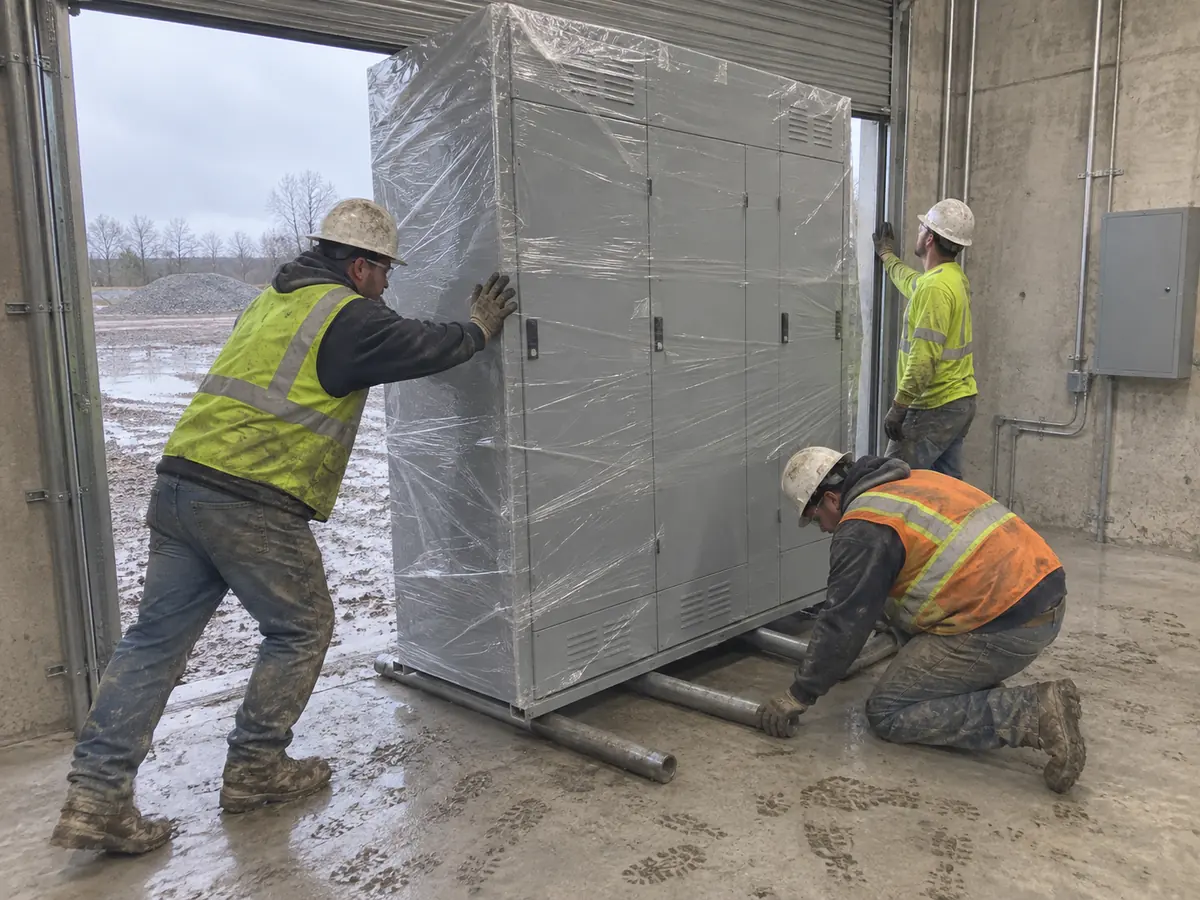
On most electrical jobs, the biggest checks you write come early. Switchgear, panelboards, transformers, lighting packages and wire are ordered or deposited before rough-in is done, and suppliers want their money on their terms, not your GC's. Meanwhile your schedule of values usually lets you bill gear only when it is delivered and stored, or installed, depending on what the contract says about stored materials.
So the electrical cash curve has a hump: heavy outflow in the first month, payroll every week after that, and the first pay-app check arriving around week 10 or 11 on net 45. The hump is the number to plan for.
Typical job: a $720,000 gear-heavy scope
Here is a hypothetical tenant-improvement-to-core electrical package, run through the same math as our calculator:
- $720,000 contract over 20 weeks
- Materials at 45% of the contract, with 60% of that bought in the first three weeks
- $16,000 a week in burdened payroll
- Pay app every 4 weeks, paid net 45, with 10% retainage
What the calculator shows:
- Peak cash gap: about $419,000, in week 10. That is how much of your own money (or someone else's) is in the job before the first check clears.
- First check: about $130,000, in week 11. That's 90% of what you billed in week 4, after retainage.
- Retainage: $72,000, released around week 29, two months after you finish.
- Margin on the job: about $76,000 (10.6%). The peak gap is more than five times the profit, which is why a profitable job can still run you out of cash.
Change any number in the calculator to match your job. Open the calculator with this example
On a data-center or substation job? See electrical subs on data-center work.
Your pay timeline
A typical commercial electrical job, week by week (based on the example above; your contract governs):
- Week 0Rough-in startsCrew, wire, gear deposits
- Week 4You billPay app for rough-in
- Week 10GC gets paidOwner pays the GC
- Week 11You get paidLess retainage
- Week 29Retainage releasedAfter closeout
Week-by-week table
| When | What happens | Cash |
|---|---|---|
| Week 0 | Contract signed, submittals start | Bonds, insurance certificates, submittal labor |
| Weeks 1–3 | Gear released and deposited, wire and rough-in material bought | Largest outflow of the job |
| Week 4 | First pay app goes in (rough-in plus any stored materials the contract allows) | Nothing in yet |
| Weeks 4–10 | GC reviews, owner approves, owner pays GC, GC pays you | Payroll every week |
| Week 11 | First check, minus 10% retainage | First money in |
| Weeks 15, 19, 23, 27 | Monthly checks continue | Gap shrinks |
| Week 20 | Job complete, punch list, closeout docs | Final pay app |
| Around week 29 | Retainage released (if closeout is clean) | Last money in |
Industry data backs up that lag: subcontractors reported waiting 51 days on average to be paid (Billd 2026 Market Report, accessed 2026-11-17), and 92% of subcontractors surveyed floated payroll at least once in the prior year (Siteline, accessed 2026-11-17).
Where electrical jobs pinch
Gear deposits and long-lead releases
Switchgear and transformer orders often require a deposit or full payment before your stored-materials billing is approved. Ask early whether your contract allows billing for gear stored off site, and what proof (insurance, bill of sale, photos) the GC needs.
Wire price moves
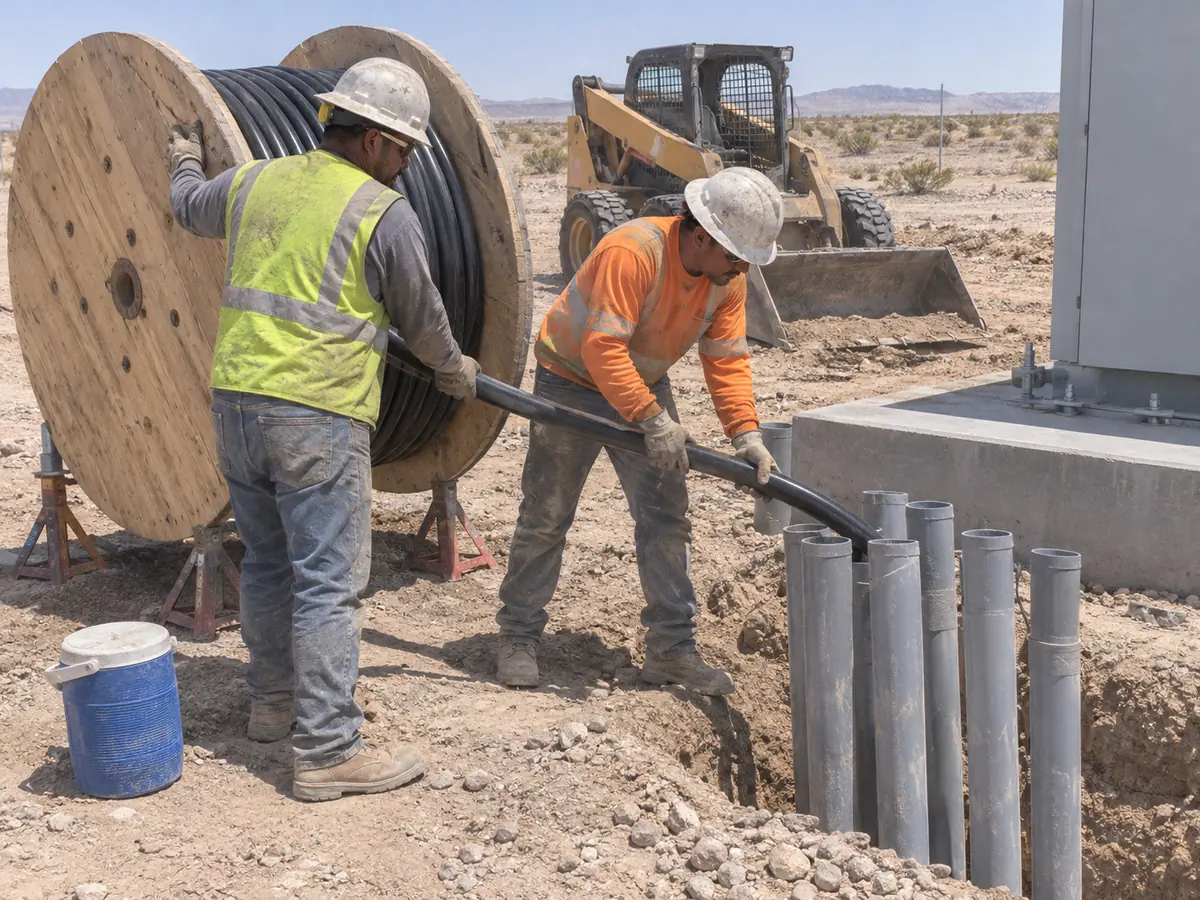
Copper-heavy scopes can change cost between bid and buy. Lock pricing with your supplier where you can.
Overtime to hit an energization date
Owners push for early power. Overtime hits payroll this week; the extra billing gets paid next month.
Change orders worked before they're signed
Common on fast-track jobs. Unsigned change-order work can't go on a pay app.
Retainage held after you're done
Electrical is often one of the last trades off site, so your retainage is tied to the whole job's closeout. Retainage caps and release deadlines vary by state; see retainage laws by state.
Data-center and tiered work
Data-center construction is pulling a lot of electrical work. US private data-center construction spending was running at a seasonally adjusted annual rate of about $96.5 billion, up roughly 90% from a year earlier (U.S. Census Bureau, C30 private construction, September 2026 data, accessed 2026-11-17). But that work is concentrated: in an April 2026 survey, 42% of contractors with $100 million or more in revenue reported data-center work, compared with 7% of smaller firms (Associated Builders and Contractors, accessed 2026-11-17).
Employment in nonresidential electrical contracting grew 6.4% year over year nationally, to about 803,000 workers in Q1 2026 (BLS QCEW, NAICS 238212, 2026 Q1, retrieved 2026-11-17).
For a mid-size electrical sub, that usually means working as a second- or third-tier sub on these jobs. Each tier adds a review step and often a pay-when-paid clause, which stretches your timeline. If you're on a pay-when-paid or pay-if-paid contract, read pay-when-paid vs. pay-if-paid before you sign.
Crossbrace Capital is not affiliated with any data-center owner, developer or general contractor.
Questions we ask electrical contractors
We ask these so we can tell you quickly whether funding fits, or whether something else would work better:
- What's the job, and what's your contract value and schedule?
- How much of the materials budget is gear, and when does it have to be paid?
- Does your contract allow billing for stored materials? On site only, or off site too?
- What are your billing terms, retainage percentage and pay-when-paid language?
- What does your monthly deposit history look like over the last several months?
- Do you have any existing advances or loans with daily or weekly payments?
- What's your backlog beyond this job?
Who this fits and who it doesn't
Usually a fit
Established commercial electrical contractors with consistent business deposits, signed work, and a gap with a clear end date (a pay app, a draw or a retainage release). One year in business is our only published minimum, and existing advances don't rule you out.
Usually not a fit
A business under 1 year old, or a gap with no clear end. If the gap is one big pay app from one GC, ask about our receivables financing instead. If an SBA loan, a bank line of credit or supplier terms would cover the need at a lower cost, we'll say so. See how the options compare.
Product note: Crossbrace Capital is a direct funder. We fund electrical contractors two ways: business funding repaid on a weekly or daily schedule (for contractors, we lead with weekly), and receivables financing against invoices and pay apps you've already billed. Costs and terms depend on your business and are set out in writing before you sign.
FAQ
Can I use working capital to pay a switchgear deposit?
Generally yes, if materials for a signed job are an approved use of funds. Before you do, check whether your contract allows billing for stored gear, because that decides how fast the deposit comes back to you.
How do you look at a job with 10% retainage?
We treat retainage as money you've earned but won't see until closeout. In our example, $72,000 of a $720,000 job came back about 9 weeks after completion. We look at whether the rest of your billings carry the job without it.
I'm a third-tier sub on a data-center job. Does that matter?
It changes the timeline, not the fit by itself. More tiers usually mean more review steps and more pay-when-paid exposure, so we ask to see the payment terms in your subcontract.
Do I need to give my SSN or connect my bank to start?
No. The first step asks about your business and the job.
What will it cost?
It depends on your business, the amount and the term. Ask for the total cost in dollars, and how payments come out, before you sign. Required disclosures are provided in states that require them. We don't publish rates because they vary by file.
What if a line of credit would be cheaper?
Then you should use it. A bank line is usually less expensive if you qualify and it's big enough. We'll tell you if we think that's your better option.
Keep reading
Guides and tools for electrical contractors
Know your gap. Then talk to us.
Tell us about the job. If we're not the right fit, we'll say so.
No SSN, date of birth or bank login to start.