
Direct business funding for construction contractors
The trades build it.
We fund the trades.
Crossbrace Capital is a direct funder for established trade contractors. We fund payroll and materials while pay apps, draws and retainage catch up, with weekly or daily payments, or with receivables financing against work you've already billed. Check your gap, and get a plain-dollar cost disclosure in states that require one.
Check your cash gap
Up to 5 taps to an estimate. No contact details needed to see it.
Let's size the cash gap on a job. 5 taps at most, and you don't need to give contact details to see the number. Nothing is sent to us until you press Send at the end.
Your request is handled by Crossbrace Capital and its sister company Funding Futures, and either may call or email you about it. We do not sell your information. By pressing Send my request, I confirm I'm authorized to request business funding for this business and that it's for business purposes only. Automated calls and texts happen only if I checked those boxes. Privacy Policy · Terms · Disclosures
5 taps. No contact details to see your number.
Or send a request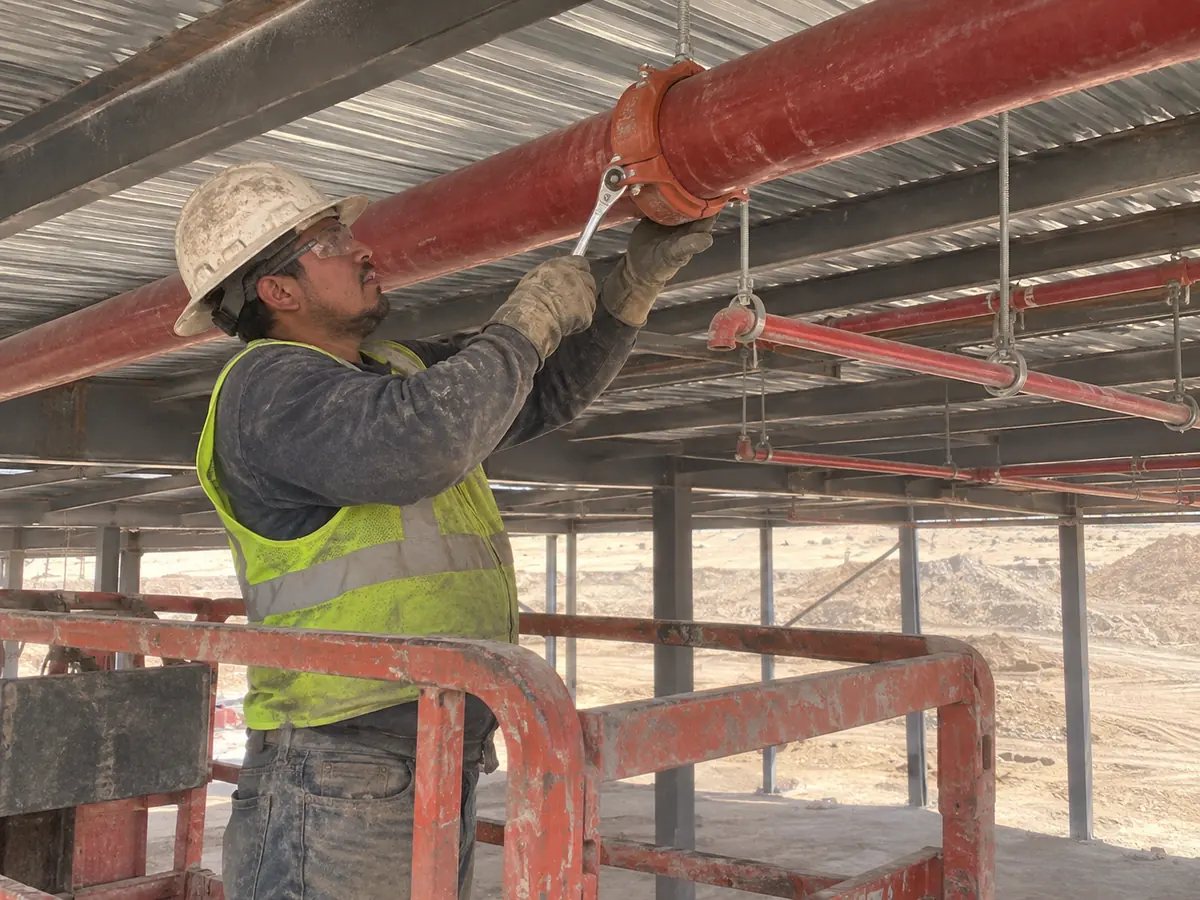
Peak gap about $306,000 in week 10.
- Week 0Work starts
- Week 4Pay app in
- Week 10GC paid
- Week 11You're paid
- Week 25Retainage released
Hypothetical $480,000, 16-week job billed every 4 weeks on 45-day terms with 10% retainage.
By area
Where the industrial construction work is in 2026
Power plants, data centers, chip fabs and LNG: where U.S. industrial construction is growing, what it means for trade contractors, and how to plan cash.
AreaWhat's building
- Phoenix metro, AZChip fabs, a battery plant, data centers
- Central OhioData centers, Intel's first Ohio fab
- Boise, IDTwo memory fabs
- Northern VirginiaData centers
- Richland Parish and Monroe, LAA 5 GW data-center campus
- Northern IndianaData centers
- Raleigh-Durham and eastern NCPharma plants, data centers
- Syracuse, NYA memory megafab
- Lake Charles and Cameron, LALNG export terminals
Spending by sector
- Power (incl. gas and oil)+12%$171.7B Sep 2026 $153.1B Sep 2025
- Data centers+90%$96.5B Sep 2026 $50.7B Sep 2025
- Manufacturing (all)−18%$167.2B Sep 2026 $203.7B Sep 2025
- of which chip, electronics and battery plants−42%$52.6B Sep 2026 $90.2B Sep 2025
- of which chemical and pharma plants+2%$43.0B Sep 2026 $42.0B Sep 2025
- Warehouses−8%$51.6B Sep 2026 $56.1B Sep 2025
Private construction spending, September 2026 vs September 2025, seasonally adjusted annual rate (Census, private construction table, released Nov 2, 2026).
What this means: power is the biggest growing category and data centers the fastest growing.
Where the work isCrossbrace Capital isn't affiliated with any company or project named on this page. Sources were checked November 18, 2026. Project plans change; check the linked source for the latest.
Who we work with
Built for contractors who bill on progress
Our tools and process are built around how trade contractors actually get paid: pay applications, draws, retainage and pay-when-paid clauses.
Electrical contractors
Switchgear, wire and a 20-person payroll come due long before the GC's check.
See how it works for you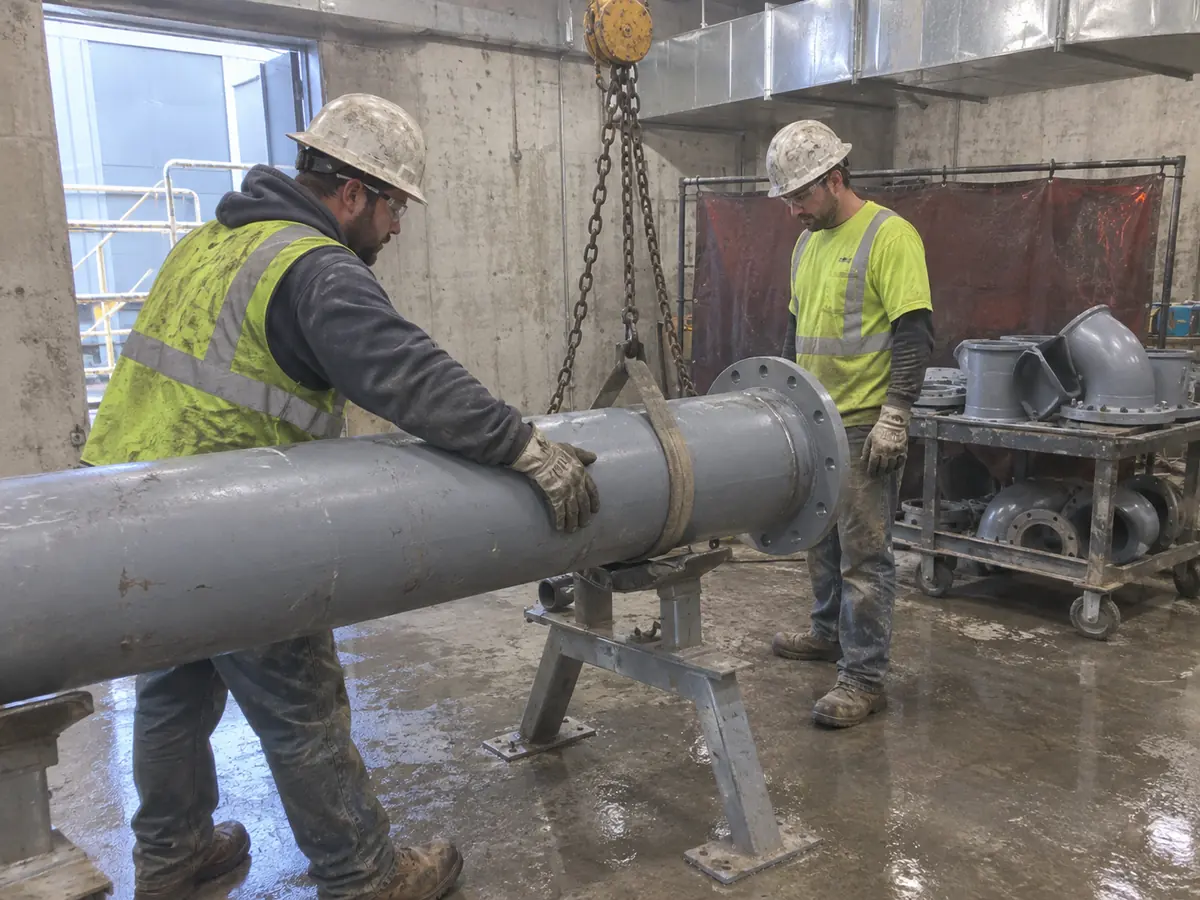
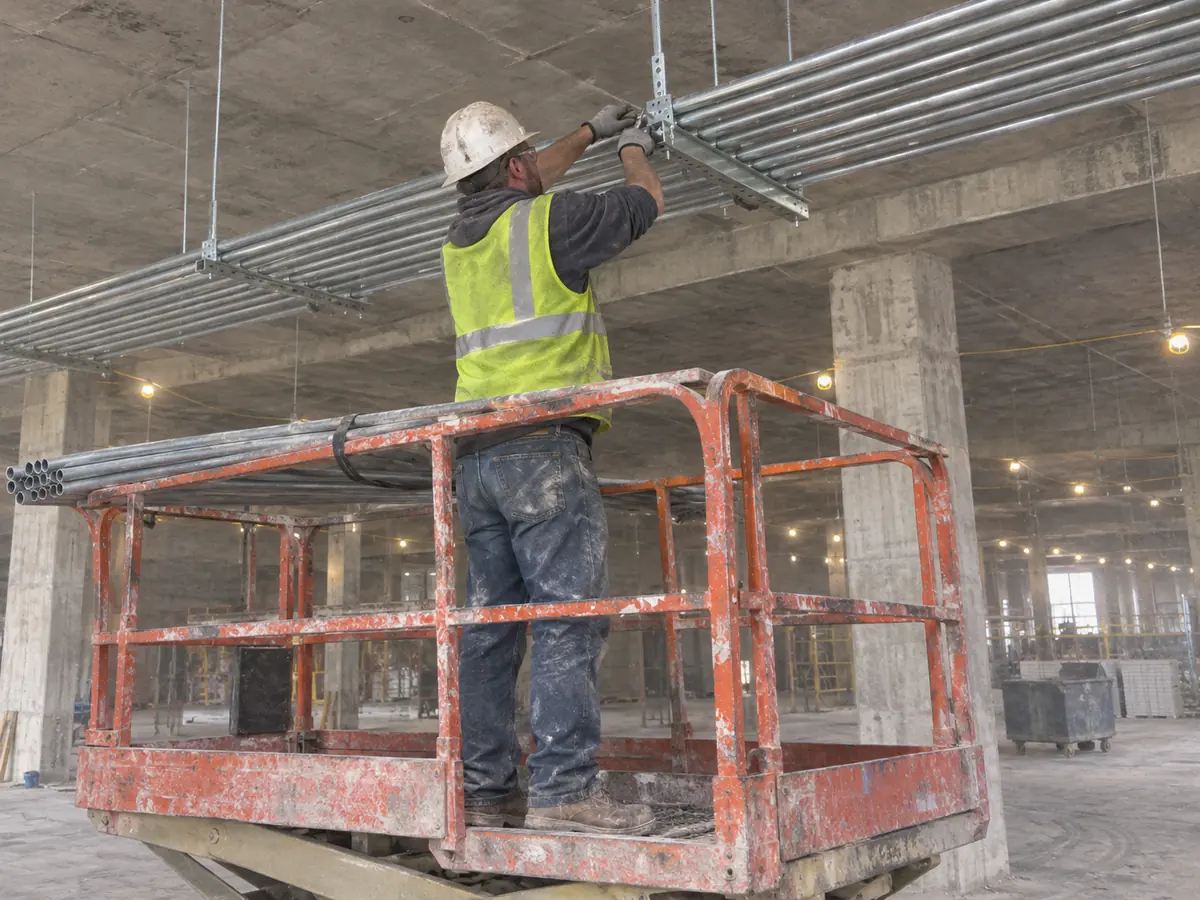
Mechanical and HVAC
Pre-season equipment buys and commercial installs on net 30 to 60.
See how it works for you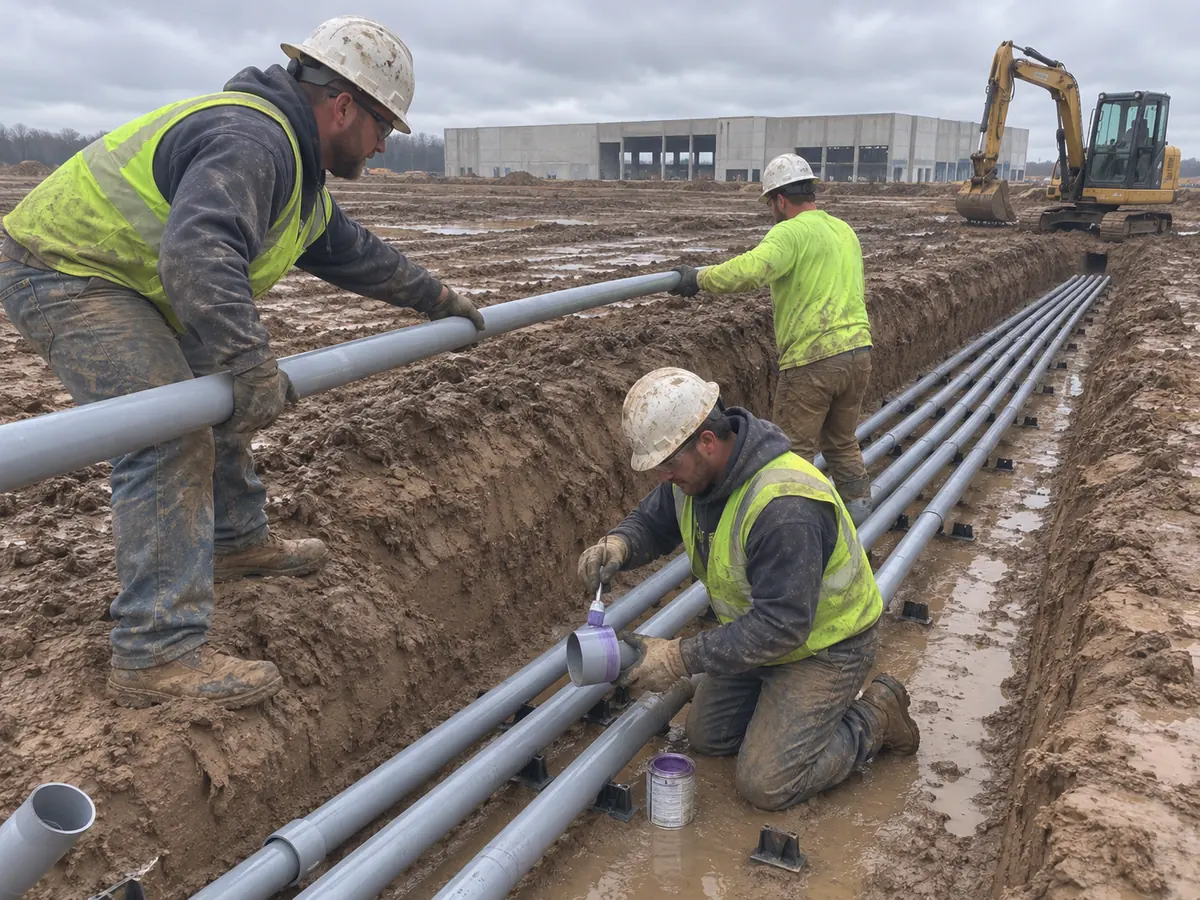
Site work and utility
Fuel, mobilization and repairs at the front of every job.
See how it works for youCash-gap calculator
Week-by-week cash out and cash in for your next job. Free, no email.
Run your numbersHow it works
Three steps, from request to an offer you review before you decide.
See the process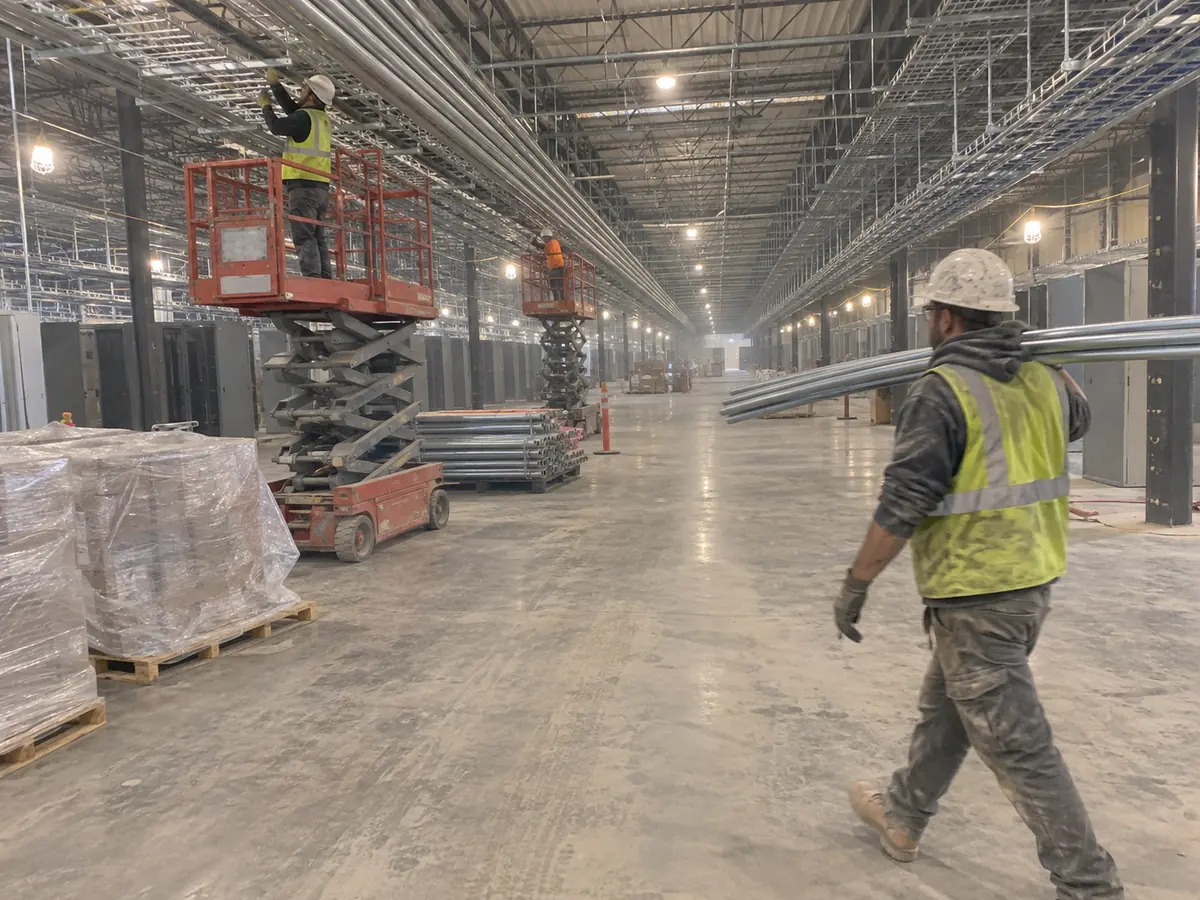
Data-center and mission-critical work
Subs on data-center, substation and fab jobs: long payment chains, travel crews and retainage held to closeout.
See how we fund itWhere the gap comes from
You pay out from day one. The money arrives weeks later.
On a typical commercial job, your costs start the first week, the first pay app goes in at the end of the month, and the check, minus retainage, arrives after the GC is paid.
- Payroll runs weekly, whether the owner has approved the pay app or not.
- Subs wait about 51 days on average to be paid (Billd 2026 Market Report).
- 5 to 10% is held back as retainage, often your profit, until well after the job ends.
The numbers behind the gap
You're carrying your customers' schedule
Average time subcontractors reported waiting to be paid (days sales outstanding).
Share of subcontractors who floated payroll out of pocket at least once in the past year.
Share who wait more than 90 days for final payment and retainage.
If that sounds like your business, you are not doing anything wrong. You are carrying your customers' schedule on your balance sheet.

Uses of funds
What contractors use funding for
- Payroll before the first draw. Cover two to three payroll cycles while a pay app works its way through the GC and the owner.
- Materials for a job you just won. Buy gear, wire, equipment or pipe without draining the account that runs your other jobs.
- Mobilization. Trucks, rentals, fuel and setup costs that land before you can bill.
- A slow season or a slow payer. Bridge a predictable dip, or a customer who is 30 days late on finished work.
- Equipment repairs. Get a truck or machine back on the job.
What we fund
Two ways we fund contractors
We're a direct funder, so the funding decision is ours. Choose the structure that matches how your money comes in.
Business funding, paid back weekly or daily
A lump sum for payroll, materials or mobilization, repaid from your business deposits on a set schedule. For contractors we lead with weekly payments: one payment a week is easier to plan around a weekly payroll and monthly pay-app checks. Daily is available if it suits your deposits.
Receivables financing
Funding based on invoices and pay apps you've already billed but haven't been paid on yet. It's built for the contractor waiting on one large check from one GC, where an advance repaid from deposits isn't the right tool.
How it works
Three steps, and you decide at every one
Tell us about the business
A short online request: your trade, time in business, typical monthly deposits, what the money is for and how much you need. No SSN, date of birth or bank login to start.
We review and talk it through
A person at Crossbrace Capital or its sister company Funding Futures reviews your request and contacts you about next steps. We'll ask about the job, your customers and your pay terms. If we need bank statements, we'll tell you why and how to send them securely.
You review the offer
If there's a fit, you get a written offer to review before you sign, with a plain-dollar cost disclosure in states that require one. If there isn't a fit, we'll tell you that too.
Free tool
See the whole job, week by week
The full calculator adds materials, billing frequency, retainage and release timing, then charts cash out, cash in and your running gap.
The calculator shows your cash gap only. It is not a funding offer.
$480,000 electrical scope, 16 weeks. $15,000 weekly payroll, 40% materials, monthly pay apps paid in 45 days, 10% retainage.
Honest fit
When an advance is not the right tool
We'd rather tell you now than after you've signed. An advance repaid weekly or daily from your deposits usually isn't the best fit if:
- One GC owes you most of what you're waiting on. If the gap is a single large invoice or pay app, our receivables financing usually fits better, because it's based on the work you've already billed. Ask about it when we talk.
- The business is less than 1 year old. One year in business is our minimum.
- Every job is losing money. Funding would only delay that problem.
- A bank line of credit is available to you at a lower cost. Use it.
Not sure? Read Cash advance vs line of credit vs factoring
Before you sign
What you see before you sign
Every offer should answer four questions in plain dollars.
Several states, including New York, California, Virginia, Georgia, Florida, Texas and Louisiana, require commercial financing providers to give a written disclosure with an offer. Learn to read one line by line.
Guides for contractors
Plain answers to the cash questions owners ask most
With sources, and no sales pitch in the middle.
- How to make payroll while you wait on a drawA week-by-week plan for the first pay app.
- Retainage and your cash flowWhy the last 10% is often your profit, and how to plan for it.
- Pay-when-paid vs pay-if-paidTwo clauses that decide who carries a slow owner.
- How to read a commercial financing disclosureLine by line, in plain dollars.
- Cash advance vs line of credit vs factoringWhich tool fits which gap.
- How much working capital does a job need?A plain-dollar sizing method.
Who we are
Crossbrace Capital is a direct funder. We fund established trade contractors across the U.S. for the gap between doing the work and getting paid, and the funding decision is ours. Availability depends on your state's rules; we'll tell you up front if we can't fund where you are. Required disclosures are provided in states that require them; see our Disclosures page.
Tell us about the job. We'll tell you honestly if we can help.
No SSN, date of birth or bank login to start.
ISO or broker? Use the partner page.