
For tier-1 and tier-2 electrical contractors on data-center, substation and power work
Financing for electrical subcontractors on data-center and substation jobs
Electrical is the biggest trade on a data center, and the biggest payroll. You're paying travelers every Friday while the first pay app works its way through the GC. Crossbrace Capital is a direct funder. We fund established electrical subs against approved pay apps, and with weekly-payment funding for the weeks before you can bill.
5 taps. No contact details to see your number.
Check your cash gap
Up to 5 taps to an estimate. No contact details needed to see it.
Let's size the cash gap on a job. 5 taps at most, and you don't need to give contact details to see the number. Nothing is sent to us until you press Send at the end.
Your request is handled by Crossbrace Capital and its sister company Funding Futures, and either may call or email you about it. We do not sell your information. By pressing Send my request, I confirm I'm authorized to request business funding for this business and that it's for business purposes only. Automated calls and texts happen only if I checked those boxes. Privacy Policy · Terms · Disclosures
Where the electrical gap comes from
The payroll is the job
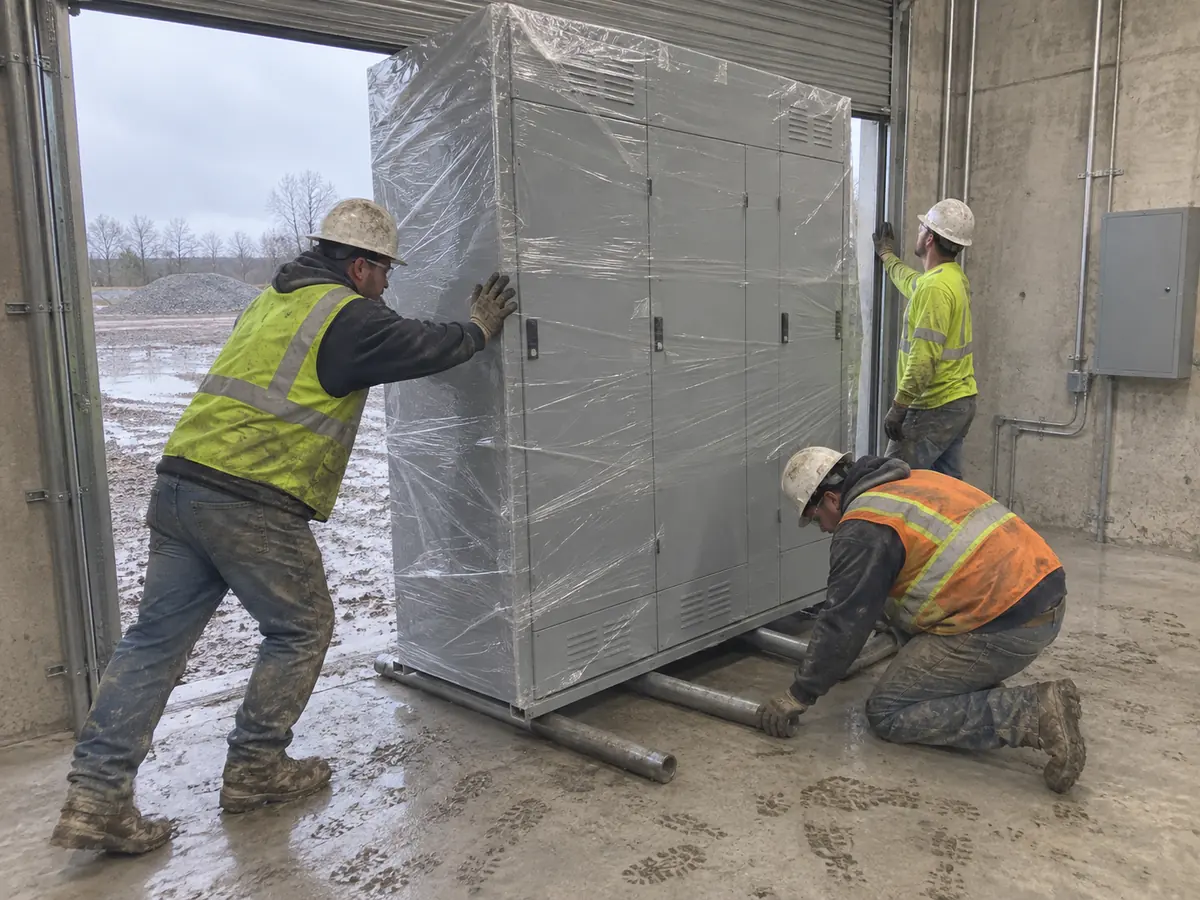
On many hyperscale projects the owner buys the switchgear, generators and transformers and hands them to the contractors to install (BuilderMuse). What you buy is wire, conduit, tray and devices. What you carry is labor.
Travelers cost money every week
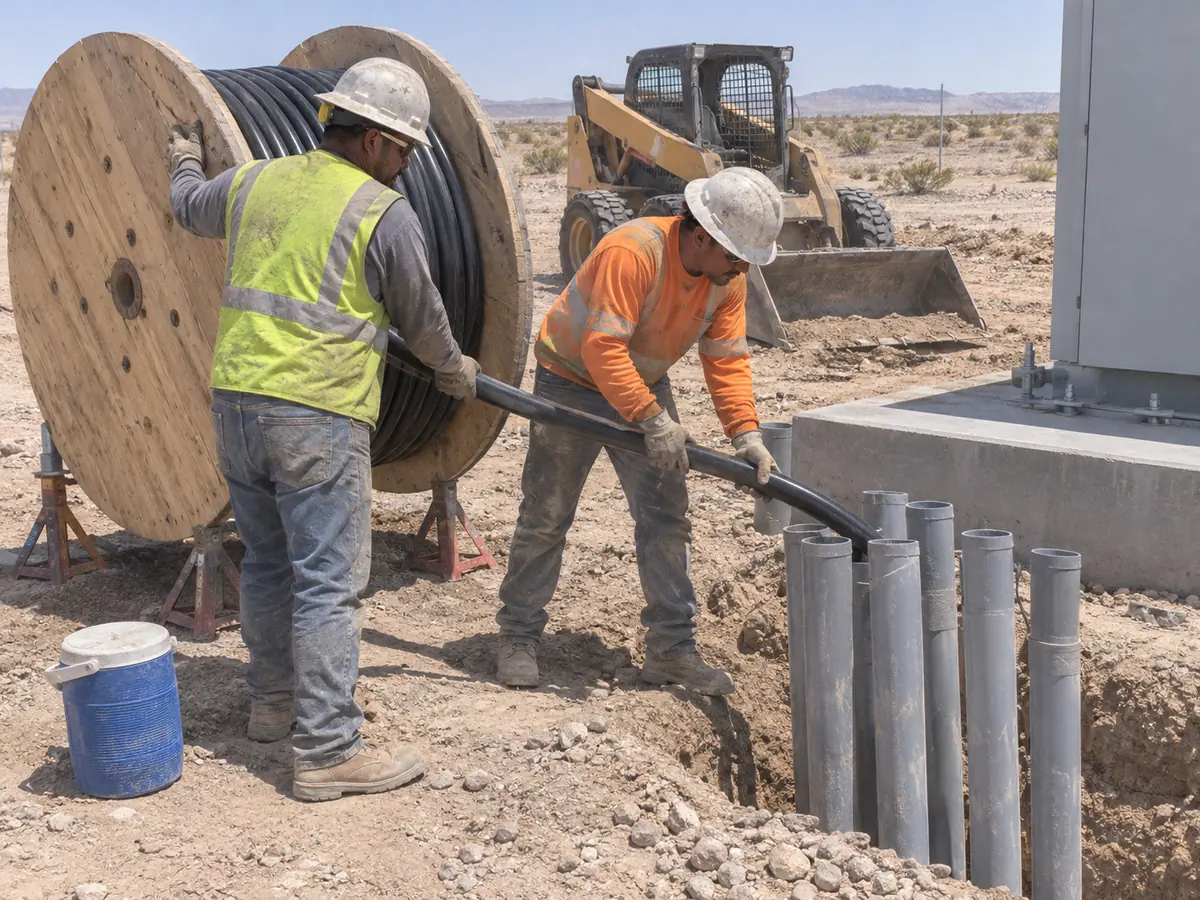
Lodging and per diem start the day the crew lands. Federal per diem for FY2027 is $121 lodging plus $80 meals a day in Loudoun County, Virginia, and $165 plus $86 in Maricopa County, Arizona in November (GSA). Your rates may differ, but that's the scale.
The schedule gets pulled in
Acceleration means 6- and 7-day weeks and overtime, paid now and billed later.
Change work outruns the paperwork
Directed changes get worked before they're priced. Subs report 22 days from a T&M tag to a priced change order request, and 92% say change orders aren't always paid in full (Clearstory 2026).
Off hyperscale, the gear is yours
On colo, enterprise and substation scopes you may buy gear yourself. Medium-voltage switchgear was quoted at 52 to 80 weeks for 15 kV and 78 to 104 weeks for 38 kV in mid-2026 (IndustrialSage, citing Terrapin), and slot deposits land long before any billing. See long-lead equipment deposits.
The work is growing fastest where the campuses are
Employment at nonresidential electrical contractors grew 37.3% in Loudoun County, Virginia and 141% in Licking County, Ohio (from a small base; the county includes part of New Albany's data-center district) between March 2025 and March 2026, against 6.4% nationally (BLS QCEW, Q1 2026). Many of those workers are travelers from shops elsewhere. If that's your crew, the gap travels with you.
What a $2.4 million electrical package can tie up
On the preset above, the sub is out about $912,000 by week 12, the week before the first check. The job still makes a 10% margin. If the chain stretches to 90 days, the low point is $1.12 million in week 16. Illustration, not an offer: a hypothetical job, not a real client or terms. Put in your numbers.
How we fund electrical subs
- Receivables financing against approved pay apps. For billed, approved work, net of retainage, repaid when the GC or tier-1 pays.
- Business funding with weekly payments. For mobilization, the first payrolls and per diem before you can bill, or a deposit on a non-hyperscale scope.
One year in business is our only published minimum, and existing advances don't rule you out. Costs and terms are in writing before you sign, with a plain-dollar cost disclosure in states that require one.
Usually not a fit: a business under 1 year old; a gap with no approved billing behind it and no clear end; a package far larger than anything your shop has run.
Before you take on the package
- Price your travel costs into the bid. Per diem, lodging, travel days and shuttle time, by week.
- Read the payment clause. Pay-when-paid or pay-if-paid, and how many days after the GC is paid. Pay-when-paid vs pay-if-paid.
- Check your state's prompt-pay law. In Arizona, a contractor has 7 days to pass payment down after it's paid (A.R.S. 32-1183); in Virginia, a pay-if-paid clause is generally unenforceable on construction contracts (Va. Code 11-4.6).
- Get change directives in writing before you put people on them.
- Know your peak. Run the calculator and line up funding before week 1, not week 10.
Frequently asked questions
The owner furnishes the switchgear. What would I need funding for?
Usually labor. Payroll, overtime, per diem and lodging for a traveling crew run every week, and your first check may be 60 days or more after your first bill. That's the gap most electrical subs on hyperscale jobs carry.
Can you fund a switchgear or transformer deposit?
On scopes where you buy the gear, a deposit can be part of what business funding covers. We'll want to see the purchase order and the subcontract that backs it.
I'm a second-tier sub under a large electrical contractor. Does that matter?
Your receivable is owed by the contractor you signed with, so its payment record matters most. Tell us who that is when you apply.
Do you fund substation and utility work too?
Yes, if you're the subcontractor and the work is commercial. The same questions apply: who pays you, on what terms, and what's approved.
Will funding show up in my GC's prequal review?
A UCC filing can. Ask any funder what its filing will cover and tell your surety agent before you sign.
Keep reading
Guides and tools for data-center subs
Know your gap. Then talk to us.
Tell us about the job and who pays you. If we're not the right fit, we'll say so.
No SSN, date of birth or bank login to start.